
BENEFITS OF INSTALLING A HOME WATER SOFTENER
Water softeners remove calcium and magnesium minerals from your water supply through ion exchange. This prevents limescale buildup, protects plumbing and water heaters, improves appliance efficiency, and creates a better lather with soaps, resulting in cleaner dishes, softer laundry, and healthier skin and hair.
Softer Skin and Hair: Hard water can leave a tacky residue on the body, drying out hair and skin. Soft water lathers efficiently and rinses completely, boosting your skin’s moisture and your hair’s shine.
Whiter, Brighter and Softer Clothes: Soft water prevents mineral buildup in fabrics, which keeps whites from turning dingy or gray and stops colors from fading. Eliminating hard minerals ensures that towels and clothing do not feel stiff, scratchy, or rough after drying.
More Lather and Reduced Soap and Detergent Usage: Because soft water doesn’t react with minerals to form soap scum, soaps lather much better. You can use up to 75% less soap for bathing, laundry, and dishwashing to achieve the same results.
Prolonged Appliance Lifespan: Hard water scale builds up inside water heaters, dishwashers, and washing machines, causing extra wear and tear. Soft water reduces this burden, helping appliances last longer.
Protected Plumbing: Removing excess minerals prevents limescale from clogging your pipes and fixtures, helping you avoid costly plumbing repairs.
Spot-Free Dishes: Dishes washed in hard water often dry with a cloudy, chalky film. Soft water allows water to sheet off easily, providing streak-free glasses and brighter, softer clothes after every wash.
Lower Energy Bills: Mineral buildup can make your water heater work harder, which increases your electricity bill. Soft water heats more efficiently, lowering your energy consumption.
And more…
PRODUCTS AVAILABLE:
-
KENT Autosoft 25L – KES 230,000
Whole-House Automatic Water Softener
Provides up to 3,000 litres of softened water per day.
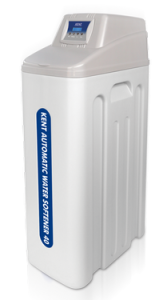
The KENT Autosoft Water Softener uses a fully automatic, microprocessor-controlled regeneration system to convert hard water into soft water. The regeneration process consists of five stages: Normal Service, Backwash, Brine Recharging, Flushing, and Brine Refill, ensuring efficient operation without the need for manual intervention or technical assistance.
The inbuilt microprocessor performs time-based automatic regeneration. The regeneration schedule is pre-programmed to occur on specified days and times, ensuring a continuous supply of softened water while minimizing disruption to your water usage.
The unit is installed alongside your overhead water tank, allowing softened water to be supplied throughout the house.
-
KENT Autosoft 8L – KES 120,000
Compact Whole-House Automatic Water Softener
Provides up to 1,000 litres of softened water per day.
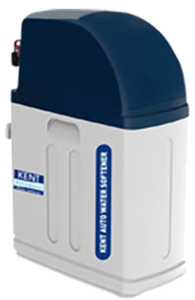
The KENT Autosoft Water Softener uses a fully automatic, microprocessor-controlled regeneration system to convert hard water into soft water. The regeneration process consists of five stages: Normal Service, Backwash, Brine Recharging, Flushing, and Brine Refill, ensuring efficient operation without the need for manual intervention or technical assistance.
The inbuilt microprocessor performs time-based automatic regeneration. The regeneration schedule is pre-programmed to occur on specified days and times, ensuring a continuous supply of softened water while minimizing disruption to your water usage.
Thanks to its compact design, the KENT Autosoft 8L can be installed either alongside the overhead water tank or inside the house on the main inlet pipe, making it an ideal solution where installation space is limited.
-
KENT Bathroom Water Softener – KES 40,000
Water Softener for a Single Bathroom
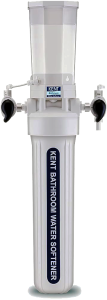
Provides softened water for one bathroom, making it ideal for showers, washbasins, and bathroom fixtures.
The KENT Bathroom Water Softener uses an ion-exchange process to convert hard water into soft water. Unlike the larger KENT Autosoft models, regeneration is carried out manually using common salt, making it a simple and cost-effective solution for softening water in a single bathroom.
Its compact design allows it to be installed directly on the water inlet pipe supplying an individual bathroom, making it ideal for homes and apartments where only the bathroom water needs to be softened.
MYTHS ABOUT WATER SOFTENERS – 8 THINGS PEOPLE GET WRONG
Water softeners can make life more convenient for many homeowners. Unfortunately, there are quite a few myths about residential water treatment that people believe. Some of them are just misconceptions, others are complete lies. Here’s the truth about what happens when you use a water softener in your home as we bust eight different soft water myths.
Myth No. 1 – Water softeners put salt in your water.
It’s easy to understand why people make this mistake. However, you are not drinking salt water if you install a water softener in your home. It’s true that you you’ll need water softener salts, but you shouldn’t taste salt in your water. Water softeners use an ion exchange process to remove minerals like calcium and magnesium, which make the water hard. A special media stored in a mineral tank makes this process possible. That media is charged with sodium ions, which replace the hard minerals in your water. So it isn’t salt (NaCl) that gets added to your water, it’s sodium (Na).
Myth No. 2 – The amount of sodium in softened water is unhealthy.
How much sodium a water softener adds to your water depends on how hard your home’s water is in the first place. That being said, the typical amount of sodium in softened water is too small to have any sort of negative impact on your health. The Mayo Clinic states on its website that “the added sodium shouldn’t be an issue for most healthy adults.” Check out the chart below. It compares the amount of sodium in softened water to common foods. As you can see, soft water adds a small amount of sodium to your diet when compared to everything else we eat.
However, not everyone likes the taste of softened water, but they don’t want to deal with hard water problems either. Thankfully, there are options. You could separate the tap you use for drinking and cooking from your system while still getting the advantages of soft water for cleaning, bathing, and laundry.
Better yet, you could install a reverse osmosis system to get pure and refreshing drinking water straight from a faucet at your sink.
Myth No. 3 – Water softeners purify water.
Water softeners are specifically designed to reduce the hardness of water. They do an excellent job of removing minerals and metals that cause scale and create all sorts of household headaches.
However, water softeners do not filter out all contaminants. This is another reason why you may need a reverse osmosis system for the water your family actually consumes. You can also look in to other types of in-home filtration systems to deal with iron and sulfur issues. We like to remind people that “sometimes you need to get good water before you can have great water.”
Myth No. 4 – Water softening takes away healthy minerals.
When some people hear how water softeners remove calcium and minerals they think the softening process is taking away important nutrients. After all, calcium and magnesium can benefit things like bone health. The truth is that the calcium and magnesium deposits in hard water are inorganic minerals, which don’t provide the same benefits as obtaining minerals from food or supplements. The calcium and magnesium in hard water cannot be easily absorbed by the cells in your body. Plants are able to transform inorganic minerals into an organic state, which is why you need to eat your veggies, but drinking hard water won’t do much for adding minerals to your diet.
Myth No. 5 – Soft water leaves a _lm on your skin.
Some people notice a different feeling on their skin when they first shower in soft water. It feels slick, and some might even say slimy. This is not a film being left behind on your skin, and it isn’t soap that doesn’t wash away either. In fact, it’s quite the opposite. When you have hard water it does leave soap scum on your skin. What you notice after showering in hard water is not a sign you’re “squeaky clean,” but instead, that you are covered in a sticky residue. The slickness on your skin when you bathe in soft water is actually your body’s natural essential oils. It’s how clean is supposed to feel! Think of it as having silky smooth skin instead of sticky soap scum skin.
Myth No. 6 – Water softeners waste water and energy.
It’s true that some water softeners can waste water and salt during the regeneration process. This is a cycle your system goes through to re-charge the media with sodium ions. Today, there are high efficiency models available to homeowners. For instance, Water-Right has developed a unique technology called W.E.T. (Water Efficient Technology) available on their Evolve and WaterCare products, which help save money and energy by learning your home’s water needs and using only the amount of water and salt that’s necessary for regeneration.
There are also other ways in-home filtration can help the environment. Soft water is more efficient at cleaning, that means you’ll use less detergent and chemical-filled cleaning products, which in turn reduces water pollution.
Plus, when you have a reverse osmosis system, you can stop buying water in plastic bottles. The environmental impact of bottled water is huge!
Myth No. 7 – Water softeners cost a lot of money.
Putting a water softener in your home will require an initial investment. However, it will save you quite a bit of your hard earned money in the long run. Yes, your water softener will use electricity, you’ll have to buy salt, and it will need to be serviced on occasion. But in reality, water softeners put much more money back in your pocket. Perhaps the biggest savings come from your water heater. These appliances operate much better on soft water while hard water makes them inefficient and forces you to run the water heater at a higher temperature. That’s one way a water softener will lower your utility bills while extending the life of appliances.
Water softeners help keep other appliances running longer, too. Soft water reduces the amount of laundry detergent you use to clean clothes by more than 50-percent, and prevents colors from fading.
Myth No. 8 – You don’t need a water softener if you have city water.
This might be one of the biggest misconceptions of all. Water softeners are most-commonly found in homes where there is a private well using ground water. In that case, the water almost always needs softening. However, municipal water is rarely ever perfect water. In fact, more than 80-percent of all homes in the United States have hard water. Every city has different water quality. If you’re unhappy with your home’s water – whether its drinking, cleaning, laundry, or bathing – there are things you can do that will provide an effective solution.